

Originally published in 2015; updated in 2026.
A note from Del: This was one of my first articles exploring frequency and its possible connections with health. Accounts of Royal Raymond Rife’s work caught my attention and eventually led me into correspondence with Anthony Holland. In this revision, I’ve clarified the distinction between historical claims, laboratory findings, and what we can explore through listening to music.
In our email correspondence, Anthony Holland explained that he had identified a relationship between frequencies he associated with Rife’s work: the first and eleventh harmonics. He described that relationship as a tritone. That caught my attention because he was recognizing a musical relationship within the frequencies he was investigating. More precisely, bringing the eleventh harmonic into the same octave as the fundamental produces an 11:8 interval. It falls between the familiar equal-tempered perfect fourth and tritone. Holland’s explanation was part of what prompted me to explore these connections further.
Recognizing that relationship raises an interesting research question. Establishing whether it explains a biological effect requires evidence from the experiments themselves. All I know is that when Anthony Holland shows videos of cancer cells being blasted to pieces by frequencies, they explode, wither, and die. What does that mean? I guess modern science would need to decide that the research deserves further study.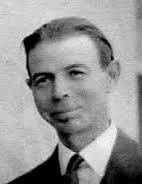
Who is Royal Raymond Rife?
Royal Raymond Rife was an American inventor associated with devices intended to use electromagnetic frequencies to treat disease. Accounts of his work include claims that particular frequencies could destroy disease-causing organisms or cancer cells.
When I first encountered those accounts, I was intrigued. As a musician, anything involving frequencies was likely to get my attention!
My original article went further, presenting reports of cancer cures as reported in newspapers of the time. Depending on the doctor you talked to, you got a different answer. Modern work hasn't done anything to help resolve any questions either. No, I can't prove the work in those articles or letters is accurate but they are there so must be considered at some point. There is a website that holds all the information about Royal Raymond Rife somewhere out there in Internet land.
If you're interested in reading research by medical doctors on Royal Raymond Rife, check Cancer Research UK where they state that there is no reliable evidence that Rife machines cure cancer. Read Cancer Research UK’s explanation of Rife machines.
That distinction matters, especially when people are making decisions about cancer treatment. Always consult a medical professional when making that decision.The Connection For This Musician
To begin with, I was married to a Naturopath and had seen many variations of a Rife machine over a period of years used by "hybrid" medical doctors and naturopaths alike. I understood probably more than I thought but had never considered the musical piece until many years later.
During my searching, I came across Novobiotronics and contacted Anthony Holland. Discovering that someone with a music background was investigating frequencies and cells certainly piqued my curiosity. We exchanged emails, and I began considering whether relationships familiar to musicians might have relevance in another field.
A conference paper coauthored by Holland describes experiments exposing cancer cells in laboratory cultures to specially configured pulsed radiofrequency fields. The authors reported changes in cell structure and proposed a possible mechanism for those effects. These were laboratory observations, rather than evidence of patients being cured. Read the conference paper by Dubost, Holland, Bare, and Bellossi.
That gives us something specific to examine. What equipment was used? What exposure did the cells receive? Could other researchers reproduce the result? What would be needed before considering treatment in people?
An interesting laboratory result can open a research path. It does not answer every question along that path.
Are these musical frequencies?
The word “frequency” appears in discussions of both music and electromagnetic fields, but we need to identify what is actually being measured.
Music reaches our ears through mechanical vibrations. The experiments described above used electromagnetic equipment. They were not experiments in playing songs to cancer cells through ordinary speakers.
Even when two frequency values form a ratio that musicians recognize, that mathematical relationship does not establish that listening to the corresponding musical interval produces the same biological effect.
My musical curiosity was the starting point. The proposed medical connection requires its own evidence.
Does medicine use electric fields?
Yes. Specific electric-field treatments have undergone clinical testing and received regulatory approval for particular uses. For example, the FDA has approved Optune Lua, used with specified cancer medicines for certain adults with metastatic non-small cell lung cancer. See the FDA’s approval record.
That approval applies to the particular device, treatment protocol, and patient group. It does not establish that Rife machines work, or that a music recording can produce the same result.
This is why it helps to look beyond the general word “frequency” and ask which treatment is being discussed. Anyone considering a device for cancer should discuss it with their oncology team rather than replace or delay care on the strength of online claims.
Back to what we can explore through music
The questions above led me toward something I could explore directly: my own response to listening.
That is a different exercise from testing a cancer treatment. It can still be interesting and worthwhile.
Choose several pieces of music. You might include classical, pop, rock, jazz, or another style you enjoy. Try some variety:
- Slow and faster selections.
- Strong rhythms and gentler rhythmic movement.
- Instrumental music and songs with words.
- Familiar pieces and something new.
Listen at a comfortable volume. There’s no need to turn it up until you feel a vibration or to force a particular response.
Spend a minute or two with each selection, or stop sooner if you prefer. Notice what happens. Does the music hold your attention? Bring up a memory? Make you want to move? Does it feel pleasant, distracting, or simply uninteresting?
Write down your observations. If you notice very little, write that down, too!
You might return to the same music another day and compare your notes. Your mood, surroundings, and familiarity with a piece may be different. Treat this as an opportunity to learn about your listening preferences.
For more ideas, see How to Choose Healing Music.
Following the questions
Royal Rife’s story was one of the things that drew me into researching frequency. My correspondence with Anthony Holland added another direction to explore.
Looking back, I can preserve what interested me while being more careful about the conclusions. A historical claim, a laboratory observation, a tested medical treatment, and a personal listening experience each tell us something different.
If you try the listening exercise, I’d enjoy hearing what you notice. Which selections caught your attention, and what made you want to listen again?
Del Hungerford
© 2015; revised 2026